Keno Explained: Is It Worth the Risk? (Odds Analysis)

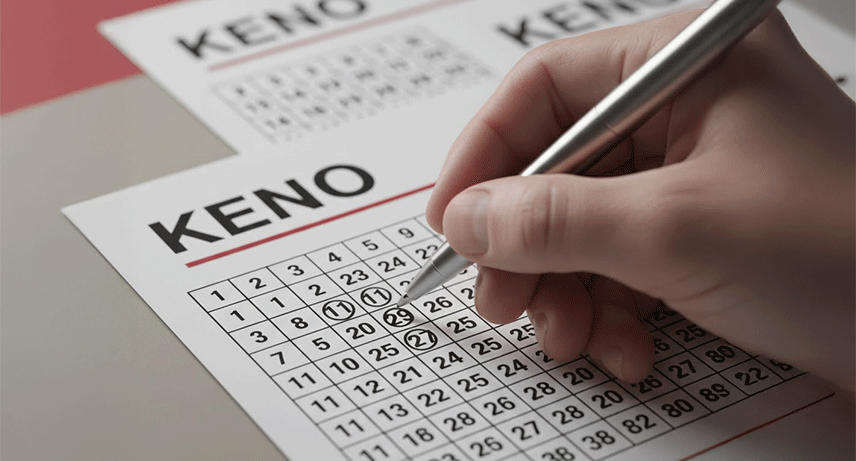
If you’ve ever walked through a casino—whether it’s the neon-glow of Vegas, the plush carpets of Macau, or even your local online casino lobby—you’ve probably seen Keno quietly doing its thing in the background. It’s that slow, lottery-style numbers game where people sit with a slip, mark a few digits, and wait for the draw like it’s a Sunday ritual. And let me tell you, after decades in casinos, I’ve met two types of gamblers: those who swear by Keno’s “relaxing charm”… and those who wouldn’t touch it with a ten-foot pole.
So the real question players search for—especially beginners—is this:
Is Keno worth the risk? Or is it just one of the highest-edge games in the casino disguised as harmless fun?
Well, pull up a chair, because as someone who’s chased numbers, watched countless draws, tested systems, and studied the gritty math behind casino games, I’m going to break down exactly how Keno works, what the odds REALLY look like, and whether the game deserves the love—or the skepticism—it gets.
And as I always say at the blackjack table:
“Every game looks good until you look under the hood.”
Let’s pop that hood.
What Is Keno? (Beginner-Friendly Explanation)
Keno is a lottery-style game where players pick numbers—usually from 1 to 80—and hope that their picks match the casino’s 20 drawn numbers. The more numbers you hit, the more you win.
That’s the simple marketing version.
The real version, from a seasoned gambler’s perspective, is that Keno is one of the slowest yet highest-variance games in any casino. It offers big payouts on paper, but statistically, those payouts rarely land. And when they do, they often don’t compensate for the long droughts in between.
One seasoned gambler once told me at the Flamingo casino bar:
“Keno is like fishing with no bait—you mostly sit there waiting, but every now and then someone catches something ridiculous.”
There’s truth to that, but not the whole truth.
To know whether Keno is “worth the risk,” you need to understand the odds.
The Real Odds of Keno (And Why They Shock Most Players)
Here’s what most casual players never realize:
Keno has one of the highest house edges of any casino game, often between 20% and 35%.
To put that into perspective:
-
Blackjack with basic strategy: 0.5% house edge
-
Baccarat (banker bet): 1.06%
-
Craps (pass line): 1.41%
-
Roulette (American): 5.26%
-
Keno: 20%–35% (sometimes as high as 40%!)
That means for every $100 wagered over the long term, the casino expects to keep $20–$35.
That’s not a typo.
Now let’s talk about the odds of hitting your picks, because this is where things get eye-opening.
Odds of Hitting All Your Picked Numbers
Below are approximate real-world probabilities:
-
Hitting 10/10 numbers: About 1 in 8.9 million
-
Hitting 9/9 numbers: About 1 in 1.38 million
-
Hitting 8/8 numbers: About 1 in 230,000
-
Hitting 7/7 numbers: About 1 in 40,000
-
Hitting 6/6 numbers: About 1 in 7,700
-
Hitting 5/5 numbers: About 1 in 1,550
You’re more likely to:
-
Be struck by lightning twice
-
Win a mid-tier scratch-off jackpot
-
Hit a rare poker hand within the same session
…than you are to hit the top Keno payout regularly.
That doesn’t mean the game is “bad”—but it means you need to walk into it with realistic expectations, not dreams of hitting 10 out of 10 like the casino brochures tease.
The Illusion of “Big Wins” in Keno
Depending on the paytable, a $1 bet on 10 numbers could theoretically pay $100,000 or more if all 10 hit. I’ve personally seen a guy at Caesars Palace hit 9 out of 10 and walk away with $4,300 on a $2 ticket. He celebrated like he won a Super Bowl ring—and honestly, good for him—but that’s also a perfect example of why Keno feels exciting.
Big wins are possible.
But statistically, they’re extraordinarily rare.
Most of the time, players get small payouts like:
-
Hitting 3 out of 7
-
Hitting 4 out of 10
-
Hitting 2 out of 5
These payouts usually just offset previous losses, not provide profit.
As one old-school gambler once joked to me at the Gold Coast:
“Keno keeps you entertained by letting you lose slowly.”
In many ways, that joke is the essence of the game.
Expected Value: Keno’s Silent Killer
Now here’s the part that separates casual players from those who truly understand the math:
The expected value of almost every Keno wager is negative—and deeply negative.
Example using a typical 10-spot ticket:
-
Long-term payback: Around 70%
-
House edge: 30%
This means:
-
Bet $1 → long-term expected return = $0.70
-
Bet $10 → expected return ≈ $7
-
Bet $100 → expected return ≈ $70
This is not a game where skill matters.
It’s not a game where strategy influences results.
And it’s not a game where frequent small hits will make you whole.
As I always say when a new player asks me about Keno:
“The math is set, and the math doesn’t blink.”
Why People Still Love Keno (And Honestly? I Understand.)
Despite the huge house edge, Keno has a loyal fanbase. I’ve met retirees who play it religiously, online players who run multiple cards, and even high-rollers who use it as a slow-paced distraction between baccarat rounds.
Here’s why:
1. It’s Relaxing
Keno is slow—extremely slow.
You can stretch $20 over an hour or two on live Keno.
For some, that’s worth it.
2. It Feels Like a Lottery
And humans love lotteries.
3. Small bets, big dreams
Even a $1 Keno card can theoretically win tens of thousands.
4. No pressure, no dealers, no decisions
Unlike poker, blackjack, or craps, Keno demands nothing from you.
5. Online Keno is faster and more controllable
Digital versions allow quick rounds or slow autoplay.
So yes, even with bad odds, the game offers something unique:
an inexpensive form of entertainment with occasional surprises.
Strategies for Playing Keno (They Don’t Change the Odds, But They Help Manage Risk)
Let’s be clear:
No strategy can change the mathematical odds of Keno.
Every number drawn is independent.
Every pick has equal probability.
Patterns do not matter.
But there ARE practical guidelines that real gamblers use to stretch their bankroll and get the best experience.
1. Avoid 9- and 10-spot plays if you care about consistency
These bets chase huge payouts but rarely hit.
A seasoned gambler once told me:
“If you’re playing 10-spot Keno, you’re buying a dream, not a win.”
2. 4-, 5-, and 6-spot tickets offer the most balanced risk
These middle-range picks give you a reasonable chance of seeing small hits without insane variance.
3. Stick to casinos with higher payout percentages
Some casinos or online operators offer 85–95% payback Keno—significantly better than the 70% range.
4. Set a session budget and stick to it
If Keno is part of your casino routine, treat it like paid entertainment, not a profit opportunity.
5. Don’t chase losses
Keno sessions can be streaky.
When the numbers aren’t hitting, doubling down rarely helps.
Is Keno Worth the Risk? (Final Judgment From a Long-Time Gambler)
After decades in casinos, seeing thousands of draws, watching people win big and lose more, here’s my honest, unbiased conclusion:
Keno is a high-risk, low-expectation game—but an enjoyable one when played responsibly.
It’s not a game for players seeking:
-
Consistent wins
-
Low house edge
-
Skill-based decision making
-
Long-term profitability
But it can be absolutely perfect if you want:
-
Slow, relaxing gameplay
-
Low-stakes entertainment
-
A chance (however tiny) at big payouts
-
A social or casual atmosphere
Keno isn’t a “good bet” mathematically.
But it’s also not a scam, not a trap, and not something to avoid entirely.
It’s simply a lottery-style game with casino flair, meant for entertainment—not income.
And as I always tell beginners who ask if they should try it:
“Play Keno for fun, not for fortune. If the numbers line up, consider it a lucky bonus.”
Final Thoughts: Should You Play Keno?
If you enjoy relaxing games, slow stakes, and the occasional thrill of matching numbers, then yes—Keno can be worth your time. But know what you’re walking into:
-
High house edge
-
Rare big wins
-
Long stretches without hits
-
Entertainment-style gameplay
Understand the odds.
Set your limits.
Enjoy the experience—not the expectation.
Because in the world of gambling, knowledge isn’t just power.
It’s protection.